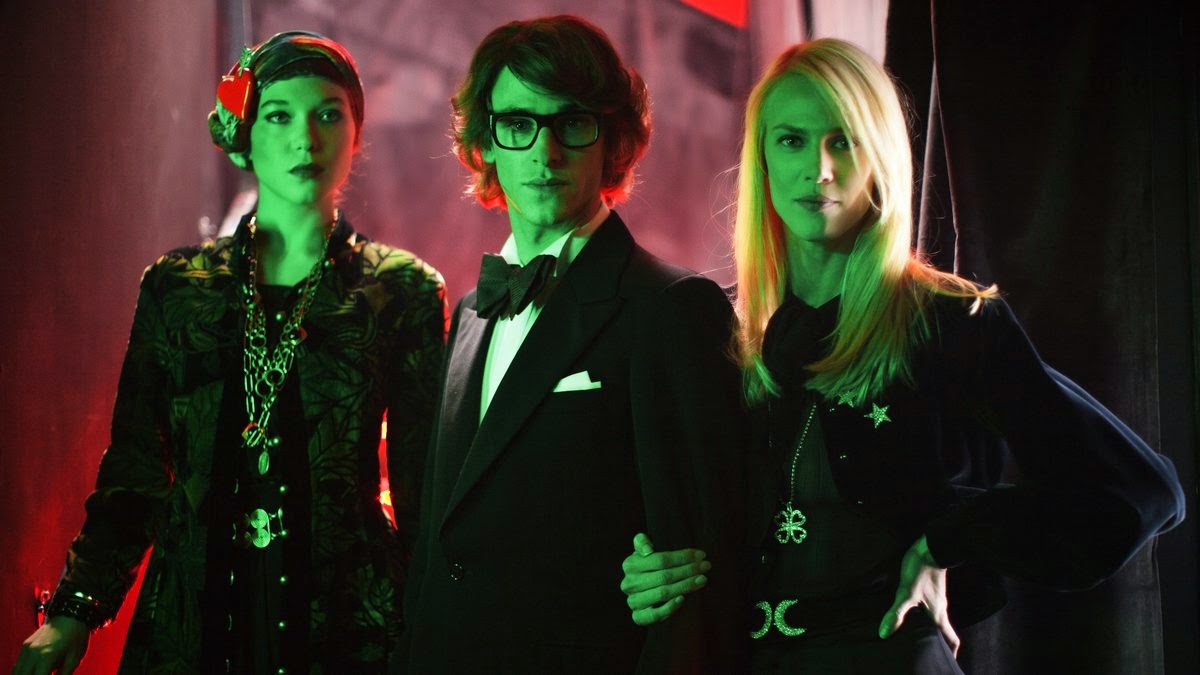
Bertrand Bonello's "Saint Laurent" was not at all what I thought it would be. Having seen the trailer I envisioned stunning settings, tasteful drama and a splash of scandal. What I got was a whole lot different.
Maybe I was blinded by appearances - it is hard not to be impressed by how the usually hunky Gaspard Ulliel transformed into weedy Saint Laurent, or by just how bloody handsome Louis Garrel looks with a moustache (who would have thought?).
Louis Garrel as YSL's and Karl Lagerfeld's lover Jacques de Bascher
And being blinded by appearance is exactly what happened to the film. Like Narcissus transfixed with his own image, it somehow forgot to come up with anything resembling substance. For a very long two and a half hours the film rambles on without much of a point of view, jumping from one time period to another, never quite explaining Saint Laurent's central relationships (his love for Pierre Bergé or his lifelong friendships with Betty Catroux and Loulou de la Falaise). The whole thing feels like an interminable trailer, with the characters as deep and relatable as models in a Saint Laurent ad.
And yet, there may be one reason to go and see this film: Ulliel's unabashed semi-hard full frontal. It was the only moment that made my jaw drop, and maybe the only time this film leaves its dull comfort zone and gives you a feel for YSL's daring and desparate private life (and Ulliel's very generous junk). Although I'm sure a decent screen shot will soon leak into the world wide web. In the meantime, I recommend the trailer over the film and Alicia Drake's "Beautiful Fall" for a real insight into the scandal.
One of the greatest drawbacks of not living in London is to miss Anselm Kiefer's retrospective at the Royal Academy. And so, when in Milan the other week, I took a rather long metro journey to the outskirts of the city to search out Hangar Bicocca. In the Pirelli factory turned contemporary art museum I found my dose of Kiefer spectacular.
Anselm Kiefer "Seven Heavenly Palaces", 2004, at Hangar Bicocca in Milan
"The Seven Heavenly Palaces" is a permanent site-specific installation, made up of seven concrete towers weighing 90 tonnes each, 14-18 metres high. And it took my breath away. Even though I didn't know much about the artist, and even though I didn't know he was thinking ancient Jewish teachings, World War II ruins and the future remains of our civilization. Because you can sense all this. And it, (along with a certain Guardian article) opened my eyes as to just how much of a crazy mystic Kiefer really is.
Anselm Kiefer, Winter Landscape, 1970
And suddenly London's call resounds even more sweetly.
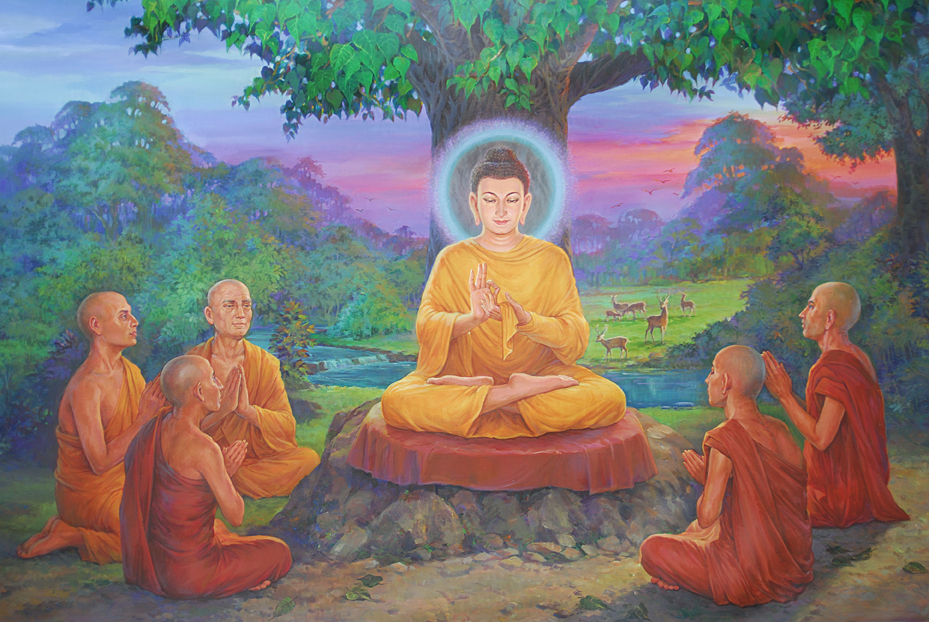
I took a spiritual break from blogging. I should have said something, but I didn't. What did I do instead? Meditate.
Nothing very mysterious or noble made me stumble on Vipassana - one day I googled 'Free Meditation courses' and there it was: A somewhat muted but efficient website informing me of a 10-day course where you're not allowed to read, write, text, call, google, copulate, masturbate or speak. And all of it for free! It wasn't going to be as pretty or instagrammable as some 'digital detox' retreats, but why should anyone, on top of everything else, make money on my inner peace?
I won't describe what the Vipassana technique is about because it would sound either prosyletizing or new-agey, and it really is something one needs to experience for onself. But it worked for me. And even the prohibitions made sense. What struck me as strange, however, was the ingrained heteronormativity on the course: Men and women ate, slept and even went for walks separately in order to avoid distractions and 'impure thoughts' (did I mention theban on masturbation?). But the presumption that being locked up with the boys would be of absolutely no erotic potential for me felt like an institutional negation of my sexuality.
Which upset me on the first days - shouldn't there be exceptions for us? Wouldn't it be easier for me to be with the girls?
And then it dawned on me: That I had somehow forgotten the fact that I was part of a minority, and that it wasn't anyone's fault. And that no one really cared. It wasn't about asserting my gay ego, it was about accepting a simple syllogism: That I'm a man, that most men identify as mostly heterosexual, and that therefore people would assume that I was too. And not in order to oppress me. This is of course a truism, but in an individualist world where you create and consume any sort of culture you like, you can live without being confronted with the simplest of truths. And then, of course, there is your LGBT-rights awareness, which knows only too well that there is still so much to be done. But that doesn't mean there is discrimination and bad faith everywhere. And after all, I learned that being with the boys isn't all that bad.
Posters all over town had been announcing it for weeks, and this Tuesday it finally happened: The permanent exhibition of Warsaw's Museum of the History of Polish Jews opened its doors. The Israeli Prime Minister came to visit, crowds flogged to the square in the former Jewish Ghetto and there was an outdoor concert by Jon Krakauer and jazz legend Tomasz Stańko.
Warsaw on Tuesday night, preparing for the opening
But it was a prematurely cold night and I stayed home. What is worse, tickets for the exhibition had been sold out for days, and only today - 5 days later - did I manage to see it. It felt like a huge deal.
The wooden Gwoźdiec synagogue reconstructed
I'm really not one of those people who can stay in museums very long, hence the shock when I came out and it was dark outside. I asked for the time and realised I'd been inside for 4 hours. The show is so engaging, so rich and varied, that you feel like you're time-travelling, from the early Middle-Ages through to the Industrial Revolution and beyond.
Workers in Izrael Poznański's textile factory in Łódź, 1890.
A lot of it was new to me. The Holocaust is a small and potent part, but maybe more shocking are the sections about progroms in Polish towns after the war. The museum has done an amazing job of reconstructing post-war Poland, including an interactive study of how Polish Jews felt about Israel and their split identities, and interview with sculptor Alina Szapocznikow(who survived several death camps) and much much more.
Alina Szapocznikow
Bizarrely, I didn't cry once - that wasn't the intention of this show. It ended on a note of hope, with videos about the revival of Poland's Jewish community. The only moment when tears welled up was when, towards the very end, I was watching a film made by an American director who returned to Poland in 1981. He visited the Polish woman who had saved him and the Catholic nuns who had looked after him until the war was over. They recognized him, kissed him on both cheeks, and welcomed him back. Now this is cause for celebration.
I didn't know James Franco had written a book until the bright yellow cover of Palo Alto fell into my hands in an Oxfam bookshop. Curiosity got the better of me.
And I'm glad it did. Not because Palo Alto taught me anything new about James Franco, but because it confirmed my prejudices (this is a very petty pleasure, yes.). Especially this: James Franco is gay. I can hardly believe some people still refuse to accept this fact (including James). Reading the stories of trashy 90's teenagehood (think Larry Clark, but awkward) I was struck by the number of homoerotic/queer sections that I really really wanted to read out loud to someone and say "SEE?!". I ended up marking the pages.
Palo Alto's Origami of Queerness
Basically, Franco is obsessed with good-looking boys and penises. Every story contains at least one 'handsome' dude and a description of cocks, while girls are usually used and abused. From the story "Camp":
"Rain had the biggest dick of all of his friends...[he] broke all the basketball records in high school and had sex with tons of ugly girls."
On watching a Holocaust film: "...bodies being bulldozed. Penises on the man and vaginas and breasts on the women. They didn't seem like real penises. I looked close. Some were big."
I am not saying a writer cannot write about penises without being branded gay (think John Updike), but Palo Alto impresses with its queerness, that is much more vulnerable than heterosexual phallomania.
Pale Alto the Film, out soon
More revealingly, Franco uses the stories to indirectly directly deal with growing up gay in 90's California. From the story Killing Animals:
"I wasn't friends with Jerry or Dan anymore. They played on the school sports team, and started calling me a fag after I quit the football team. They said Ed and I were gay together."
And in another story:
"They each had one testicle sticking out...I looked up and saw their faces and I knew that I was not supposed to be looking at those balls, that that was what they wanted. "Faggot looked!" said someone...they screamed that I was a faggot as two held me down."
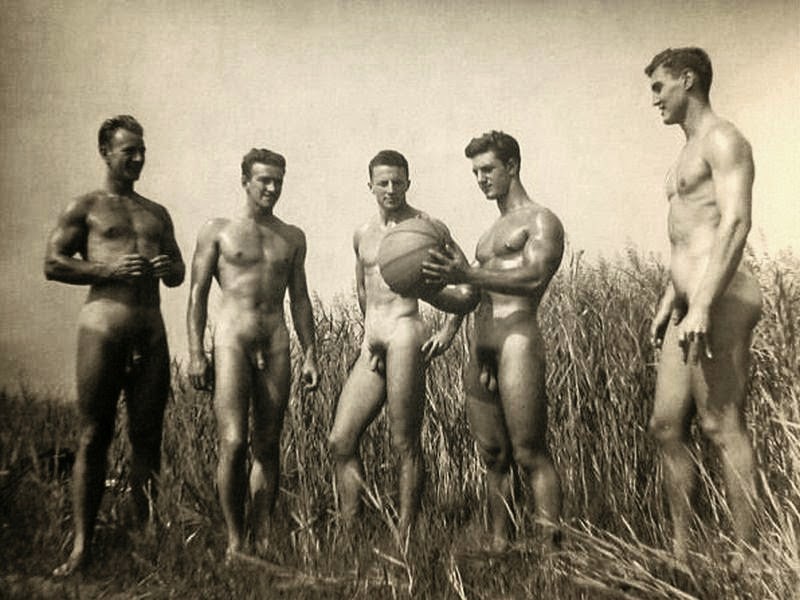
This very much echoes Franco's ridiculously gay short film The Feast of Stephen, about a boy who is bullied slash fantasy-fucked by a group of handsome basketball players.
The Feast of Stephen (2011), Short film by James Franco
Many people will not have seen this film (in fact it only has 100,000 views on Youtube - compared to Franco's 2.5 million Twitter followers) but it provides a very intimate insight into Franco's psyche. No straight guy is that interested in gay people (or cock).
Why do I care? Because I'm gay, and because it's important to say it, especially when one is asked directly. Because we don't yet live in a post-gender post-sexual orientation world, and discrimination continues. And because that gay teenager who is being bullied right now would really appreciate to know that you can be handsome and masculine and talented and gay and out. You just need to grow a pair of balls.
On a sunny day in Tbilisi the other week I saw a tree stump in front of my friend's house. Lo and behold! Something made me climb onto it. And stand on it. Still. This felt great for 2 reasons:
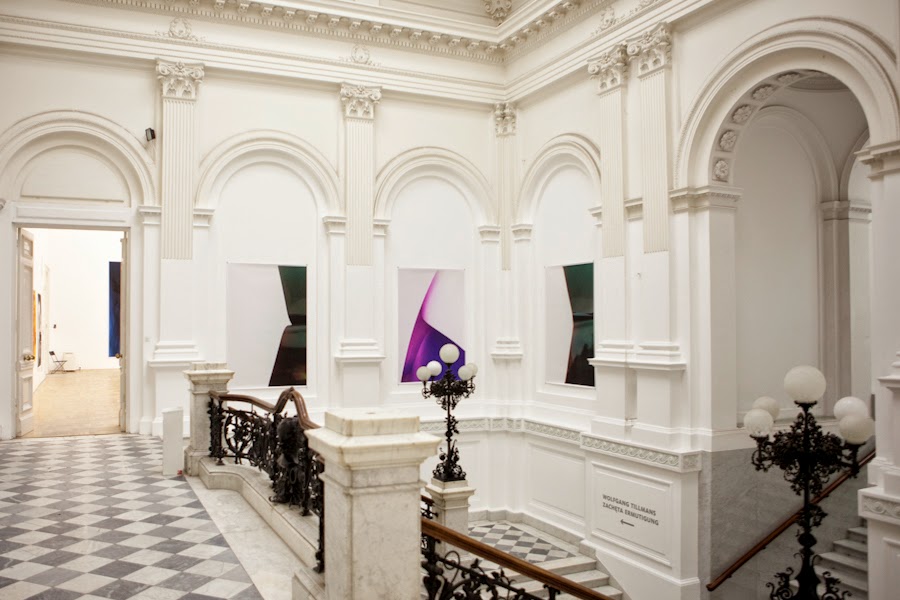
Tomorrow I am travelling to Georgia and Armenia for a little while. As a mini-goodbye to Warsaw and to you, here some shots Wolfgang Tillmans made for his 2011 show at the Zachęta Gallery.