Yes - Jean-Michel Basquiat as a reclining nude. If these days it is no longer unusual to see an artist naked (think Marina Abramovichor evenAi Wei Wei), it is probablt because they use their bodies for their art like so many (other) entertainers. Which is why these shots are different. Taken by a former girlfriend of Basquiat and forgotten for over 30 years, they show the painter both literally and figuratively naked. The nudity here is not a costume or a means to an end. It simply reveals intimacy and carries with it a reflection of Basquiat's short life: After turning away to light a cigarette and smiling into the camera with a mix of glee and discomfort, all that remains is an inward look and a few scattered drawings.
Łódź is Poland's third-biggest city, and it is filled with ghosts. The ghosts of textile workers who lived in cramped tenement houses facing the factories, the ghosts of magnates who dined in rococo palaces, and the ghosts of Jews rounded up and deported.
David Lynch, Untitled, (Łódź), 2000
They are there, the ghosts, floating around side by side with the living. The tenement houses are still inhabited, with the same staircases and the same railings, covered by a thousand layers of fingerprints. The rococo palaces are art museums that hardly anyone visits, or restaurants that stay empty on a Friday night. And the ghetto, untouched by the war, has stayed so since: With windowless staircases, crumbling façades, and no paint left to peel. Descendants of those who moved in seven decades ago live in monuments to something they don't care to recall.
David Lynch, Untitled, (Łódź), 2000
So why visit? Because everywhere else, the traces of the past have been made to look pretty. Everywhere else, the ghosts have been chased away and reconstructed behind glass. Not in Łódź.
Although it is Behind the Candelabra which dominated the headlines this year, winning eleven Emmies and showing Michael Douglas as the camp and closeted (& Polish) WładziuLiberace, 2013 was actually a great year for boxing down queer stereotypes on film (especially in Poland).
Here my favourite features of last year that starred gay characters and refused to be 'gay films'.
1. Tom At the Farm
Xavier Dolan's fourth feature film lies somewhere between tragedy, comedy and psychological thriller. Sexual tension sizzles between characters dead and alive, and repression becomes a sign of madness. There is so much more to come from this 24-year-old, I cannot wait.
Tom at the Farm (2013), trailer
2. Floating Skyscrapers
"The most courageous film of the year" said the poster for this film, and it might be right: You don't see full-frontal gay sex in arch-catholic Poland every day. And yet the film isn't set on provocation per se, but on exploring the fear to become oneself. Which ends up being much more shocking than naked bodies.
Płynące wieżowce (Floating Skyscrapers), 2013, official trailer
Floating Skyscrapers - English teaser
3. In The Name Of...
For being incredibly shot and shedding light on a Church taboo. Szumowska's film is not about paedophilia, nor about abuse, but about a priest who happens to be a homo. Powerful, beautiful, and necessary.
In the Name Of (2013), English trailer
4. My Brother the Devil
Alright, not strictly 2013, but I only discovered this gem a couple of weeks ago. Take an East London housing estate, second-generation immigrants, drugs, violence, and forbidden attractions: the right ingredients to fall into a cliché trap. And yet this film manages to dodge them all and create something entirely new and surprisingly empowering. A must-watch.
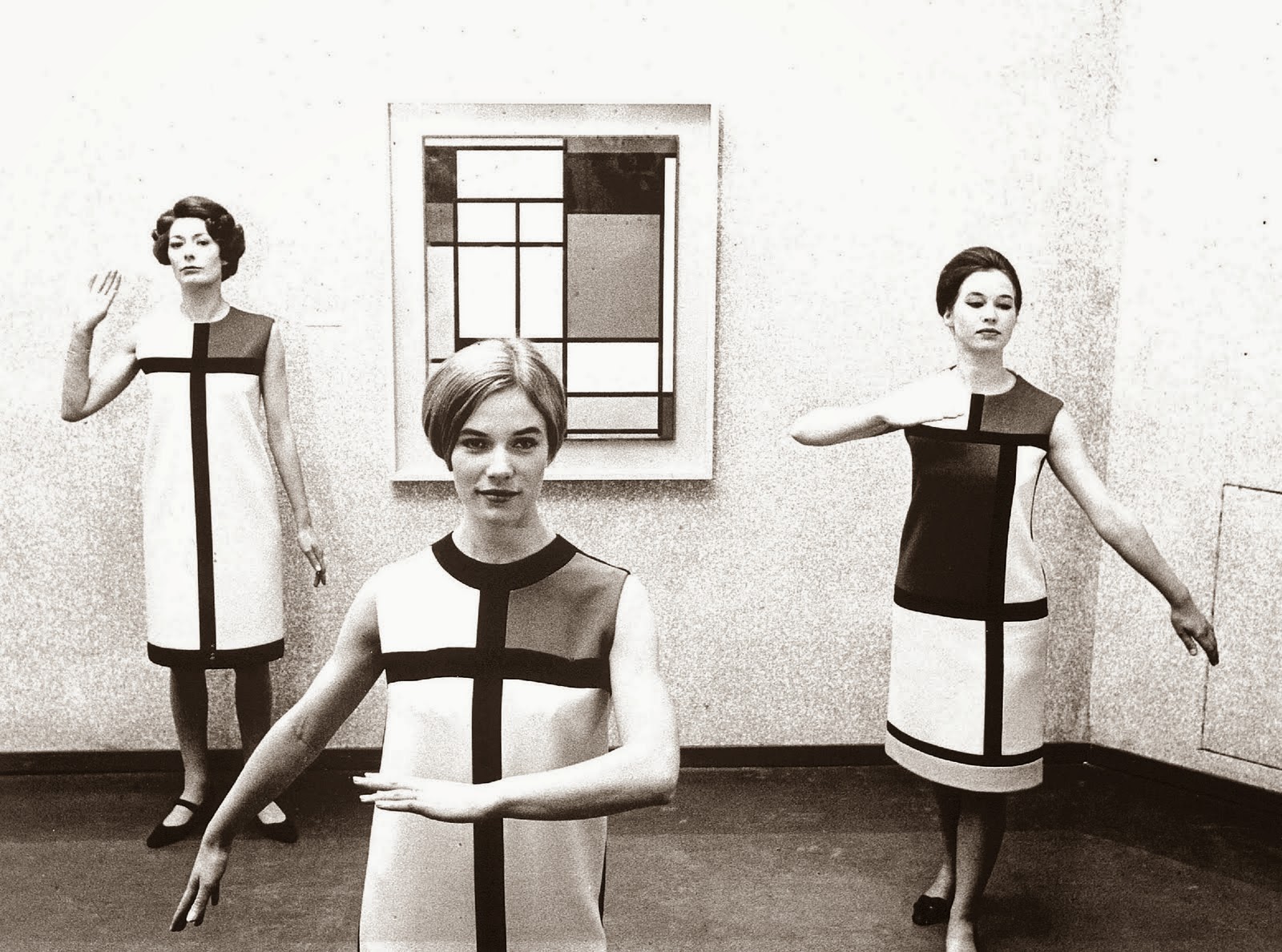
Ever since Yves Saint Laurent created the Mondrian dress in 1965, fashion and art have been spinning towards one another like two halves of a magnet. One only needs to look at the last seasons to see theevidence of fashion houses using the fine arts as an inspiration. The Byzantine mosaics appearing in last season's Dolce Gabbana collection being one of the more successful examples.
Meanwhile, more and more photographers have been making the jump from galleries towards fashion, bringing in new creativity. Robert Mapplethorpe may have been a mistake, but contemporary success stories include Ryan McGinley (here for Stella McCartney) and this season, Collier Schorr and Viviane Sassen.
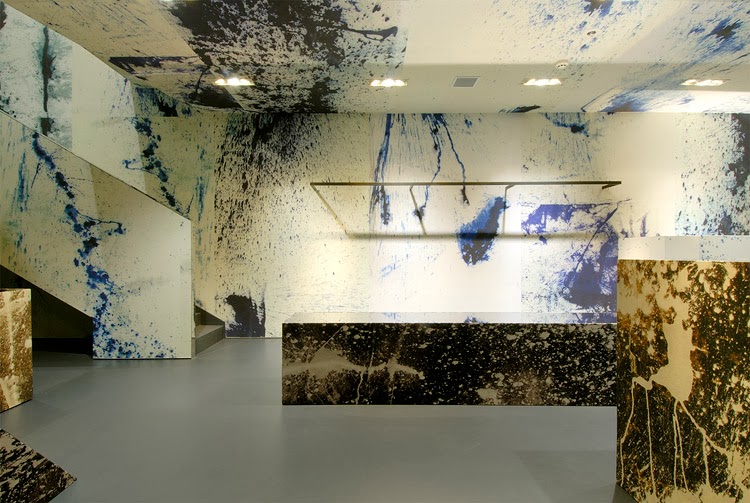
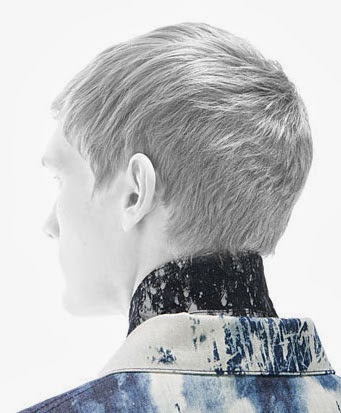
It was only a matter of time, then, that the blurred line between artist and designer is now being further erased. Raf Simons recently announced that contemporary artist Sterling Ruby would be "taking over" his label for the A/W 2014 men's collection shown in a couple of weeks. Ruby had previously designed Simons' Tokyo flagship store and collaborated on a collection, but this time it seems to be more than a collaboration.
Simons announced: "What interests me now is to say that this is not just a collaborative thing, not just asking someone in my field to do the knitwear or the bags. This is all the way, all the way. There is not one shirt, one shoe, one sock that is not from our mutual thinking process.”
Sterling Ruby in his L.A. studio
The interior of the Raf Simons' store in Tokyo
Raf Simons x Sterling Ruby collection Spring Summer 2010
The show is possibly the most anticipated of January's Paris fashion week. What Picasso for Dior or Magritte for Lanvin would have looked like will remain speculations for fashion historians. As for the love between art and fashion now, we only have to stay tuned.
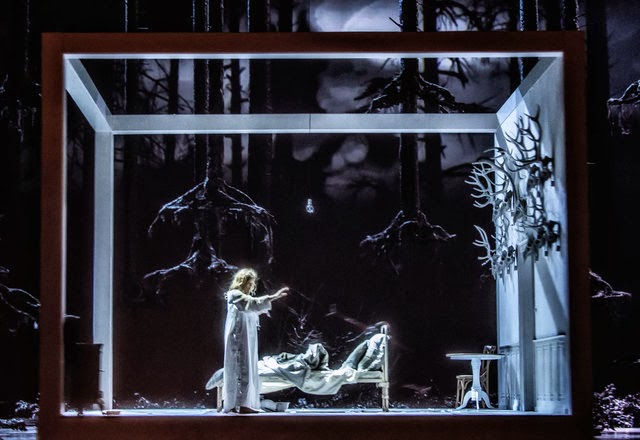
It was like witnessing a whole new genre of art: With spectacular décor stunts like giant Penone-esque tree trunks descending from the ceiling (see first photo), and subtle 3-D projections on an invisible curtain separating audience and performers (third and fourth pics).
And yet, the staging never stole the show - it placed the stories in a magically timeless sphere, aided by the right amount and the right kind of innovation. Who knew? Opera is back to avant-garde.
Who can resist the entertaining tackiness that is a pineapple dress? The UK Channel 4 show My Big Fat Gypsy Wedding - and its even more garish US equivalent "My Big Fat American Gyspy Wedding" - have catapulted travellers into to the mainstream. Or should one say, turned prejudices into a joke?
"Gypsy Soul", Bruce Weber for US Vogue April 1992, feat. Rossy de Palma
In Poland, where no such TV show exists but where violence against the Roma is ripe, an art show explores for the first time the notion of Gypsiness. How do people see the Roma, how do the Roma see themselves? The exhibition is a revelation, and you can read my review for this is tomorrow magazine here.
British Roma artist Delaine Le Bas' installation at the Zachęta Gallery in Warsaw
But more crucially, the exhibition may mark the beginning of a serious questioning about the place of Roma culture within the national landscape. "Papusza", a feature film about the life of Polish-Roma poet Bronisława Wajs has just been released. It touches upon the silent chapters of gypsy existence, including the half-forgotten Roma Holocaust, social exclusion and the conundrum of permanent settlement. It is also very beautiful.
Papusza (2013)
Following all this immersion, I attended a workshop at the Zachęta gallery with Roma artist Gosia Mirga. How do you see us? she asked, and gave us more than one could need to make a collage. This is what I came up with. Hardly as spectacular as a pineapple dress. But then I never thought I'd make it onto Channel 4.
Last night at the Black Bear Filmfest, Xavier Dolan's new film "Tom at the Farm" convinced. Intense, intelligent, and surprisingly eerie, this is the Canadian director's best yet.
Dolan, almost unrecognisable with bad clothes and worse hair, plays Tom, who attends his ex-boyfriend Guillaume's funeral in the countryside and gets entangled with Guillaume's violent brother Francis (played by head-to-toe hottie Pierre-Yves Cardinal).
The tension is real and palpable from beginning to end, broken up only with some improbably hilarious scenes. It's a bit as if Almodóvar had made a film in the 80s and decided to set it on a Canadian farm. Except that it is truly scary. And Cardinal is sexier than Banderasever was. Instant classic.


,-2000.jpeg)