If I haven't posted anything in a while it's because I've spent every spare moment reading "Secret Historian", the phenomenal biography of a man I had never heard of: Samuel Steward (1909-1993)
Samuel Steward aged 16
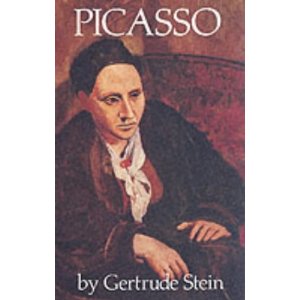
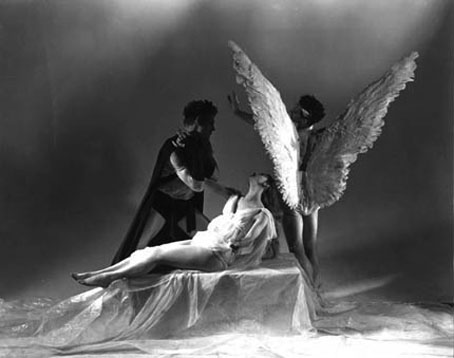
English professor, novelist, tattoo artist, sexual rebel, literary pornographer: Steward was all these things. He lead an extraordinarily varied and risqué life, befriending brilliant minds such as Getrude Stein, Alfred Kinsey or photographer George Platt Lynes, and seducing anyone from André Gide, Rudolph Valentino and Lord Alfred Douglas (Oscar Wilde's lover) to Rock Hudson and hordes of sailors.
Getrude Stein and Alice B. Toklas, Steward's life-long friends
Photography by George Platt Lynes
Steward in a Polaroid with an unknown man
What is most striking about the biography, however, is the utter contrast between outside and inside. Through Steward's meticulous diary entries we gain an insight into a highly intelligent and creative yet ultimately lonely and depressed man. At first the reason for the unhappiness is not quite clear. There is no doubt that society's repression of homosexuals in America - for pretty much all of Steward's life - was a factor. But then he did express himself sexually, and never seems to have felt guilty for his desires.
Mike Miksche, a sadist whom Steward paid for S/M sessions
The Stud File recorded every one of Steward's sexual encounters for over 60 years
Instead, the issue was self-esteem. Steward never seems to have been at peace with himself, restlessly moving from one sexual adventure to the next, one vocation to another, courting danger and setting himself up for literary rejections, while not allowing himself to really value his talent for tattooing. How can you stop yourself from becoming bitter?
Steward in 1957, aged 48, with a tattoo he designed for himself
A tattoo made by Steward
One of Steward's pornographic novels, published under the pseudonym of Phil Andros. Cover: custom-designed by Tom of Finland
When he was in his twenties and depressed, Getrude Stein wrote him a letter, talking of 'the question of being important inside in one'. This seems to be the key. And something Steward never quite mastered. Sadly - or luckily - happiness is far removed from brilliance.
"Warszawa, Warsze" is the new exhibition at the Museum of the History of Polish Jews, and it is a stunner. By reconstructing pre-War Jewish Warsaw with the help of maps, photos and video, it brings home how different a creature the city used to be. Apart from entire neighbourhoods that have disappeared - such as the legendary Nalewki shopping street - there is a plethora of buildings which I could only but wish were still here.
Like the Egyptian themed Kino Splendid.
Imagine seeing Cleopatra in there? The cinema was part of the Galeria Luxembourg, a glass-topped shopping arcade constructed in 1909 on Senatorska street. The whole thing burnt down in 1944.
Which is sad not because there is lack of shopping malls in Warsaw, but because there is lack of old and beautiful ones. The new Koszyki market hall project does not count, and I will begrudge them forever for closing probably Warsaw's best bar everfor it.
The now-closed Koszyki club (2013-2014, R.I.P.)
But not everything is going downhill. Did you know the 17th-centurySaxon palacemight be rebuilt?
The Saxon Palace and the Nevsky Cathedral, early 1920s
Formerly one of Warsaw's most iconic buildings, it too was destroyed in 1944. Since then, Piłsudski square has been an eye-sore: a massive, overwhelmigly empty lot in the middle of the city centre (click here if you can face it). After plans for a reconstruction were frozen due to the global financial crisis, they are back on the table; and construction might just begin in a couple of years.
Walking into Warsaw's Zachęta Gallery today I was dumbstruck to find a Comme des Garçons fashion show playing on TV, instead of Henryk Tomaszewski's poster exhibit. Curatorial fuck-up, I thought. Just when I was beginning to love the place! Or had all that eBay time finally caused a fashion-brain-hemorrhage?
Luckily, neither nor. Fact: Rei Kawakubo used Tomaszewski's poster designs from the 60's, 70's and 80's in her Homme Plus A/W 2006 show.
notice kid on lap
As Tomaszewski's son, Filip Pagowski, remembers:
"[The]Polish graphic/printing industry was poor...but these conditions forced designers/graphic artists to develop a different, independent and often more creative vocabulary still pertinent today.
Proof: Lanvin used the whole colourful-hands idea in their show for next season. So behold when you see those fun fingers fondling every guy's chest on the High Street in 5 months.
Lanvin A/W 2014
And as if this wasn't enough, know the ubiquitous smiling-heart logo of Comme des Garçons PLAY, the brand's diffusion line? Tomaszewski's son Filip Pagowskihappens to be responsible for that.
Which makes me proud, in a lame way. And brings to mind Salman Rushdie's rumination: "[W]hat was it with all these Poles who kept cropping up in various positions?"
First, environmentalist supermodel Angela Lindvall travelled to Marrakesh for brand new Portermagazine and delivered instagrammy utopia. The shoot may be less fashion forward than French Vogue's incredible Morocco editorial in 2010, but it is also more dreamy (and like everything perfect, doesn't take itself too seriously).
Next, Fucking Young magazine's editorial "Inflorescence" put me into the mood for Spring. Far too long have we waited for flowers to bloom. And now I just want to run through fields with my arms in the air. Who wouldn't want a backpack made of hortensias while doing that?
Ending on a melancholic note - because Paradise only ever exists in retrospect - Russian queer exile-artist Slava Mogutin remembers the Crimea of his childhood. It includes naked boys, Stalinist monuments and the sub-tropical beaches of Koktebel. And there we were thinking Putin had no taste.
From somewhere deep down came the need this week to revisit Rainer Werner Fassbinder's world. It's been a year since a friend sat me down in front of the close-to-the-bone Fox and his Friends (where Fassbinder stars as a working class gay who wins the lottery), and my thirst for the director's caustic eye had been building up ever since.
Fassbinder himself in Fox and His Friends (1975)
Which is why I went ahead and swallowed three of his films in 24 hours.
First, The Bitter Tears of Petra von Kant(1971). This three-woman drama about possessiveness and class shows the very thin Margit Carstensen as Petra, a Bremen-based fashion designer, who falls for commoner Karin Thimm (the very stunning Hanna Schygula).
The entire film unfolds in Petra's room. There is no music, and the atmosphere is tense and fabulously ritualistic, like a Greek drama. Of course the Petra-Karin liaison goes tits up and Petra ends up crying very bitter, gin-fuelled tears. In Fassbinder's world, someone always gets exploited. But you can't help but feeling they deserve it a little.
Next I stumbled upon Bremer Freiheit, a play Fassbinder wrote and directed just a year before he made Petra von Kant. And there are some hints at that: Margit Castensen plays Gesche Gottfried, the 19th century serial killer from Bremen (I had no idea Fassbinder was so smitten with my city of birth).
Scene from Bremer Freiheit, a play written and directed by Fassbinder
Over a period of 15 years, the working-class Gottfried (whose maiden name was Thimm - like Karin in The Bitter Tears of Petra von Kant), poisoned her entire family, including mother, father, her children and two husbands. As a child I remember spitting on the official Gesche Gottfried spit stoneon the market square where she was finally executed, but Fassbinder flips the story around. He makes it about repression, about a woman's desire for emancipation. You end up rooting for the poor murderer.
Bremer Freiheit (1972), in German
Finally and after much female drama, someone very dear recommended me Querelle.Which, really, should be called Queerelle: Based on a novel by Jean Genet, featuring art by Andy Warhol and starring Brad Davis as a sailor being sodomized by Fassbinder's ex-lover Günther Kaufmann, this is arguably the gayest film ever. It is also bold, strange, fantastic and unpredictable, a bit like walking on deck of a rocking (queer) boat.
A scene from Querelle
Fassbinder, Brad Davis, Andy Warhol
Sadly, Fassbinder did not live to see Querelle in its final version. He died three months before its premiere, from a drug cocktail, aged 37. In a career that lasted fewer than 15 years, he completed 40 feature films, two television film series, three short films, and 24 stage plays. And there I was, worrying that watching three films in one day was excessive. There is still so much to do.